

AI Curriculum Tools for AACSB Business Schools
Student-first. Faculty-led. Science-backed.
Career Key’s PathAdvisor courseware helps faculty teach career competencies and AI literacy while identifying leading indicators for retention and persistence.
Measure the impact of any course or intervention on career readiness with our built-in, graded pre/post assignments in your LMS.
Backed by 30+ years of validated assessments and peer-reviewed research.
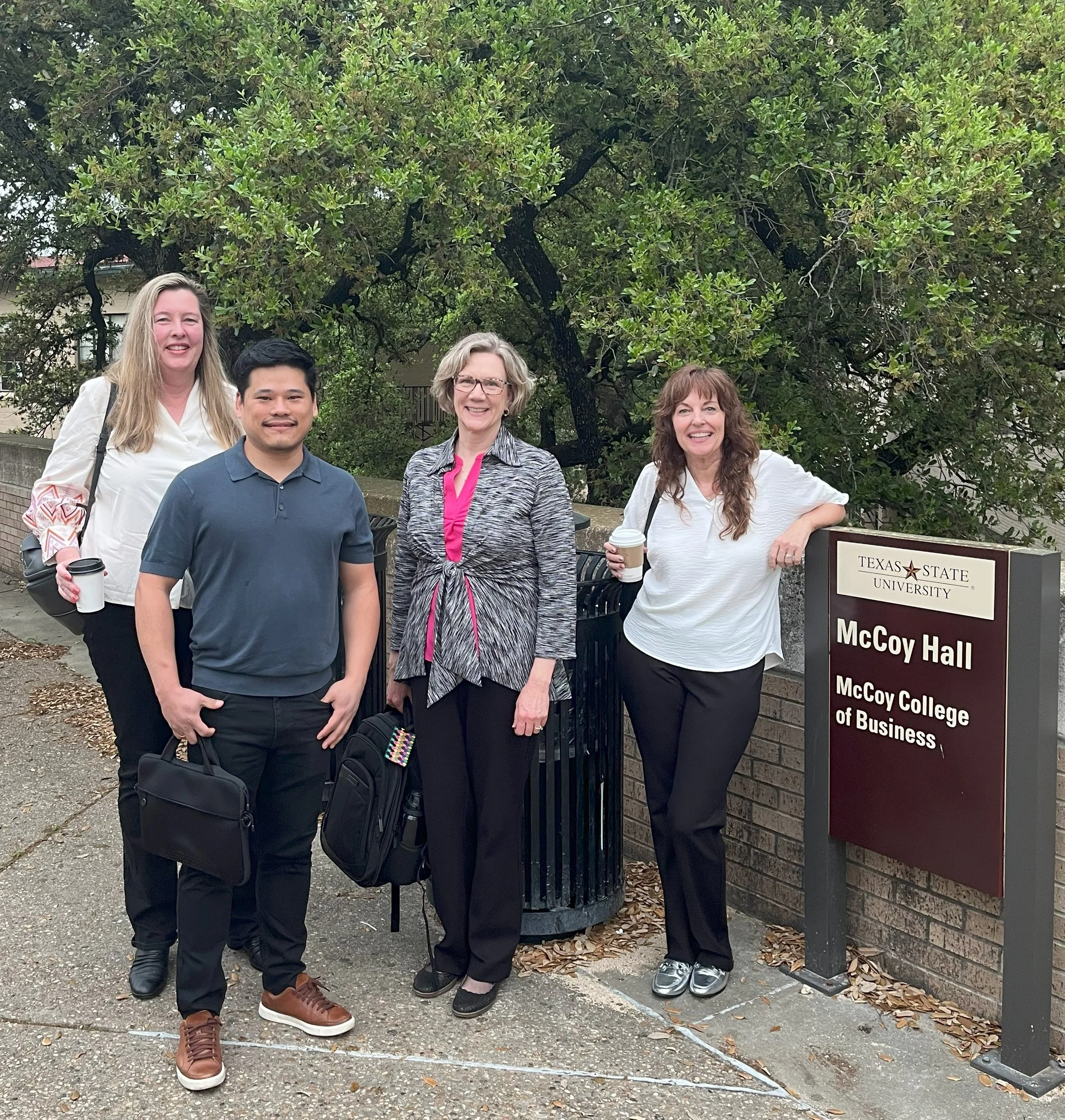
Career Key at AACSB accredited McCoy College of Business, Texas State University
Career Key is an AACSB Sustaining Business Member
What Peer AACSB Institutions Are Finding
Texas State University — McCoy College of Business
School Profile
75th Best U.S. Public Undergraduate Business School (Poets & Quants). 4,200 undergraduate business students. 7 majors, 5 minors, 3 concentrations, 75 undergraduate majors campuswide.
The Challenge
Identify accurate major and career fits for large, diverse cohorts of first-year students. Boost career competencies across the college’s 3-year required professional development course sequence with 5–10 faculty teaching cohorts of 800–1,200 students.
Results
Using PathAdvisor’s pre/post tools, Texas State measured the impact of its first-year course on 621 students:
30% of students felt more decided and/or comfortable with their academic and career direction
35% increased their self-clarity, including knowledge of their strengths, values, personality, and interests
27% increased their knowledge of careers and Texas State majors, minors, and concentrations
Retention impact: Students in the PathAdvisor course had a 6% major-change rate vs. 12% for the college and 14% for the university.
“By using PathAdvisor data, we’re able to work with the Student Success Center and meet student needs, especially those that have high academic or other needs so that we can refer students proactively to those services and support.”
University of Alabama — Culverhouse College of Business
School Profile
31st Best U.S. Public Undergraduate Program (U.S. News & World Report). 9,839 undergraduate business students. 9,839 undergraduate business students on main campus and online. 11 business majors, 18 minors, 11 concentrations, and 80 undergraduate degrees campuswide. PathAdvisor adopted across the first and second year required professional development curriculum.
The Challenge
Early exploration at scale
Engage students early to explore majors and careers both inside and outside the College of Business — before they commit to a path that may not fit.
Accurate major and career matching
Identify best-fit academic and career paths for large cohorts in a required professional development course sequence.
Scale without losing quality
Deliver holistic, personalized digital course material across cohorts of 2,200–2,400 students and 75+ faculty and academic advisors.
Identify at-promise students
Intervene earlier with the right students to boost retention — before they disengage or change majors.
“We’re a college of many students; our cohorts tend to be 2,200–2,400 so there’s no way we could do a lot of this at scale without the use and technology of Career Key.”
“Critical Early Professional Development Needs of Gen Z Business Students,” Career Key Research brief for AACSB members as seen in the AACSB Insights article, “Prove it! Measuring Gen Z’s Career Readiness”
How PathAdvisor Works in Your Business Curriculum
PathAdvisor is career readiness courseware—digital course materials in your LMS—designed for required professional development courses in AACSB-accredited business schools. Faculty assign 5–20 minute activities.
Students complete validated assessments, explore best-fit majors and careers customized to your institution, and interact with Ariel, an AI coaching assistant that uses a Mentor Mindset approach grounded in each student’s assessment data.
AACSB-Aligned Outcome Data
PathAdvisor generates two types of data that support AACSB accreditation reporting:
Real-time leading indicators of retention and major persistence risks, using an Early Intervention Model for Career Support that categorizes students into four support levels.
Pre/post course assessments that measure student growth in career readiness, self-clarity, and career knowledge—providing measurable evidence of course impact for Standard 7 reporting.
NACE Competency Alignment
PathAdvisor teaches three of the eight NACE career readiness competencies that employers rank as most important:
Career & Self-Development,
Critical Thinking, and
Technology
Faculty use syllabus integration guides, rubrics, and discussion prompts from the PathAdvisor Faculty Toolkit to embed these competencies into existing course structures.
Seamless LMS Integration
PathAdvisor is 1EdTech LTI 1.3 Advantage Complete certified—the highest level of LMS integration certification. It works in Canvas, Blackboard, and Moodle with single sign-on. Your IT team adds it in under 10 minutes. Students access it through their campus bookstore via VitalSource and Follett 1st Day Digital programs.
AI Advising That Builds, Not Replaces
Ariel, PathAdvisor’s AI Assistant, uses a Mentor Mindset coaching approach grounded in each student’s validated Career Key Discovery and Career Decision Profile assessment results. Ariel asks questions, doesn’t just give answers—directing students to human advisors and campus resources when they need more support. Career Key has a published Responsible AI Policy.
PathAdvisor in Business Schools
Partnering with AACSB-accredited business schools since 2018
Adopted across required professional development course sequences at Texas State, University of Alabama, and University of Minnesota
Used by 70+ business school faculty across 150+ course sections
Cohorts ranging from 800 to 2,400 students per institution
100% institutional customer renewal rate
116 publications citing Career Key assessments across 10+ countries
30+ years of peer-reviewed research


Request Free Desk Copy of PathAdvisor
Request your free desk copy and get a complimentary Syllabus Integration Report. Example
Trusted by Texas State University, University of Alabama, the University of Toronto Mississauga, Kansas State University, and the University of Minnesota.